

Think Microsoft 365 is fully secured out of the box? Not quite. This article explores how cloud-based endpoint protection fills critical gaps in your environment and why businesses using Microsoft 365 need more than default settings to stay secure.
Where Microsoft 365 Endpoint Security Falls Short
Microsoft 365 is often viewed as an all-in-one productivity and collaboration suite, and to a certain extent, that’s true. It includes native tools for email filtering, access management, and device security. But when it comes to truly protecting the endpoint, it’s not a silver bullet.
Endpoint Threats Are Evolving
Modern cyber threats don’t knock on the front door – they slip in through side windows. Attackers often target user endpoints through phishing emails, malicious downloads, and compromised personal devices, which makes training end users to spot threats as important as the device itself.
The problem? These threats don’t always trigger alarms in Microsoft’s built-in tools unless those tools are configured well beyond their defaults. Even then, they may still miss:
- Fileless malware: Malicious code that runs in memory, leaving no trace on disk
- Credential stuffing attacks: Automated tools that test stolen usernames and passwords at scale
- Lateral movement: Attackers navigate through your network once one device is compromised
These aren’t hypothetical risks. They’re everyday tactics, made easier when endpoint protection isn’t airtight.
Default Isn’t Defense
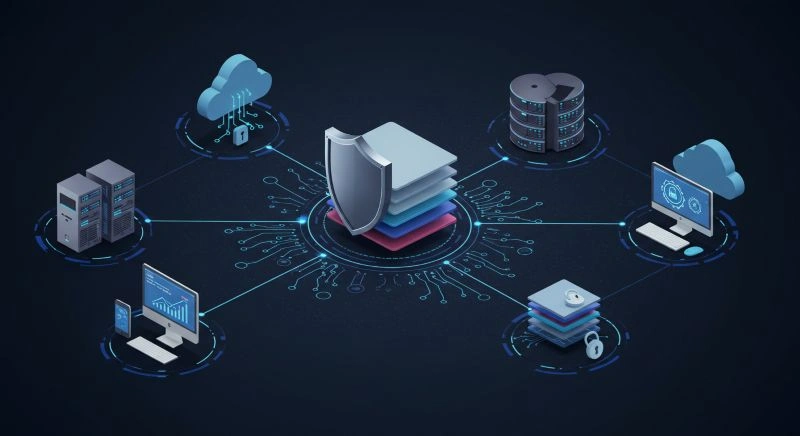
Microsoft Defender is a capable part of the Microsoft 365 security ecosystem, but its default configuration doesn’t reflect the realities of the threat environment. Many organizations leave Defender in its basic form, without enabling advanced hunting, ATP (Advanced Threat Protection), or cloud-delivered updates.
And even with everything turned on, gaps remain:
- Lack of policy consistency across devices
- Poor integration with third-party security solutions
- Limited incident response automation
This is why layered security, particularly at the endpoint, is no longer optional. It’s essential, a theme we expand on in our guide to safeguarding Microsoft 365 data.
What Cloud-Based Endpoint Protection Should Deliver
Adding cloud-based endpoint protection doesn’t mean you’re discarding Microsoft’s built-in defenses. It means you’re building on them intelligently.
Here’s what to expect from a modern solution, and why each element matters.
Complete Device Security
The “endpoint” today is not just a corporate-issued laptop. It’s a personal smartphone used to check emails, a tablet used during travel, or a remote desktop spun up for a project.
A strong cloud endpoint protection platform should:
- Automatically discover and inventory devices
- Enforce security policies for unmanaged or personal endpoints
- Apply encryption, antivirus, firewall, and patching protocols consistently
- Offer remote wipe or lockout features for lost or stolen devices
The value lies in consistency – no matter what device connects, it should be subject to the same scrutiny.
Real-Time Threat Detection & Response
In cybersecurity, reaction time is everything. Traditional endpoint protection tools often detect threats after the damage is done, logging the event, but not stopping the attacker.
A cloud-native platform flips the script by:
- Detecting anomalies based on behavioral changes, not just known signatures
- Cross-referencing endpoint data with global threat intelligence in real time
- Isolating suspicious processes before they spread
- Sending alerts with contextual data for faster triage
This isn’t just protection – it’s prevention, powered by the cloud.
Scalable Cloud Management
Gone are the days of manual patching, device checks, and VPN-based access control. Today’s IT teams need both agility and security.
Cloud-managed endpoint protection provides:
- Centralized administration via browser-based consoles
- Role-based access control (RBAC) for team collaboration
- Integration with MDM/EMM platforms for mobile device security
- Cloud-delivered updates, so devices stay protected without user intervention
Even better, this architecture reduces reliance on on-premise infrastructure, making it ideal for distributed and hybrid organizations.
Integration with Microsoft Defender
Don’t toss Microsoft Defender aside – instead, extend its power, as we explain in our breakdown of Defender for Endpoint in Microsoft 365 E3.
When properly configured and integrated, Microsoft Defender for cloud endpoint protection can:
- Share real-time telemetry with third-party security tools
- Act as the first line of defense with automated attack surface reduction rules
- Work alongside EDR (Endpoint Detection and Response) systems for deeper analysis
- Feed data into SIEM tools like Microsoft Sentinel for centralized threat monitoring
The goal here is synergy. Defender becomes part of a multi-layered, responsive, and adaptive security strategy not the sole line of defense.
Plugging the Hidden Gaps in Your Endpoint Strategy
Endpoint vulnerabilities aren’t always obvious. You may think your systems are secure simply because antivirus is installed and policies are in place, but cyber attackers thrive on that kind of complacency.
Here are five areas where many organizations unknowingly fall short, and how cloud-based endpoint protection closes the loop.
1. Shadow IT Devices
Users often introduce unauthorized devices into the network: phones, tablets, USB drives, and even rogue virtual machines. These endpoints are hard to monitor and typically bypass security protocols.
Solution: Cloud-based platforms can automatically detect unregistered devices, restrict access until compliance is met, and notify IT in real-time.
2. Outdated Software and Patches
Endpoints missing updates are soft targets. Attackers routinely scan for outdated software and known vulnerabilities.
Solution: Cloud endpoint tools provide real-time patch status dashboards, automated update scheduling, and push notifications to users, ensuring no device is left behind.
3. Inconsistent Security Policies
Policies may be deployed, but are they enforced? Some endpoints go weeks without connecting to the corporate network, long enough to slip through the cracks.
Solution: Cloud-managed systems ensure policies are enforced the moment a device connects, no matter where it is, through always-on cloud connectivity.
4. Slow Response to Breaches
Even when alerts are generated, manual response times can be hours or even days. By then, data exfiltration may have already occurred.
Solution: Automated playbooks powered by machine learning can respond in seconds, blocking IPs, quarantining files, and alerting teams immediately.
5. Lack of Visibility
If you can’t see a threat, you can’t respond to it. Many security tools operate in silos, offering fragmented views of what’s happening.
Solution: Unified dashboards bring endpoint data, user behavior analytics, and threat intelligence into one pane of glass, giving IT full visibility and context.
Control the Chaos, Strengthen the Front Lines
Endpoints are often the first and sometimes the only line of defense between your data and a cyber attack. But relying solely on Microsoft 365’s default protections is a gamble in today’s high-stakes threat environment.
Cloud-based endpoint protection isn’t about adding complexity. It’s about simplifying security through automation, visibility, and scalability.
Let’s recap the key takeaways:
- Microsoft 365 offers a great foundation, but it’s not enough by itself
- Modern threats require real-time detection, cloud intelligence, and automated response
- Cloud endpoint protection solutions scale with your business, not against it
- Microsoft Defender can and should be part of the solution, not the whole story
- Gaps you don’t see can become doors attackers walk through, cloud protection closes those doors
Whether your team is fully remote, hybrid, or globally distributed, cloud-managed endpoint protection provides the centralized control and proactive defense you need to stay ahead.
Security is no longer about walls and locks. It’s about visibility, agility, and layered protection starting right at the endpoint.
Is your Microsoft 365 environment truly secure? Now is the time to assess your endpoint strategy, close the gaps, and take full control of your security future, with the cloud as your ally.